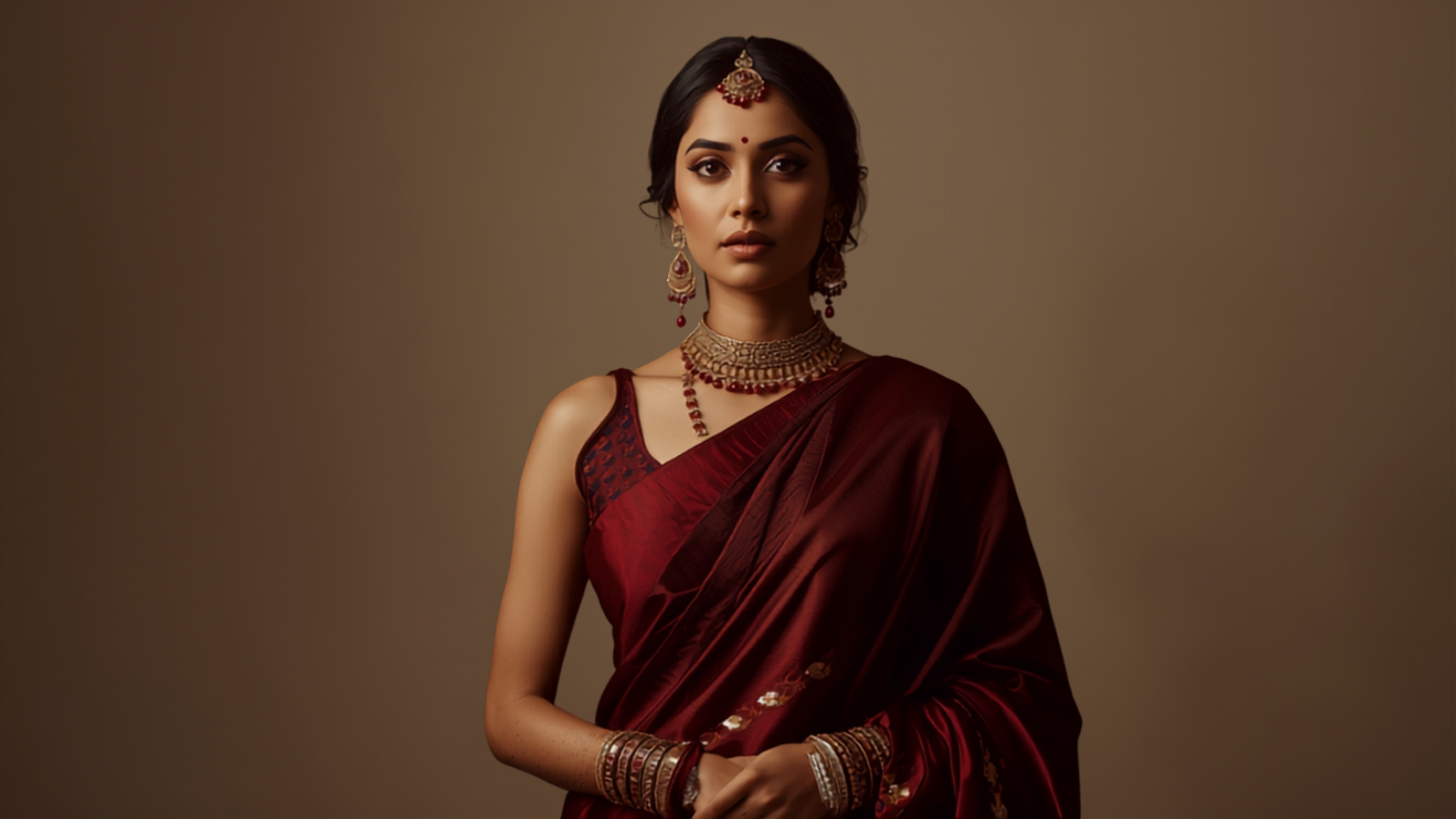
A bride sat across from me a few weeks ago with a Sabyasachi lookbook open on her phone, and a steel trunk from her mother's house sitting unopened between us. She wanted the lookbook. I wanted the trunk. When we finally opened it, out came a Kanjivaram in a deep temple maroon, stiff with age and thirty years of camphor, and I remember thinking: this is the better lehenga.
That instinct, dressing a bride in her family's history rather than a showroom's newest arrival, is quietly becoming the most interesting thing happening in Indian bridal fashion right now. It is not a rejection of the new season's silhouettes. It is a way of making them personal. And it is showing up everywhere I look this month: in the sheer, barely there dupattas replacing heavy borders, in the muted heirloom hues sitting next to this year's burgundy and emerald, and in a growing number of brides who would rather rework than replace.
The Aesthetic: Heirloom as Raw Material, Not Relic
The old approach to a family saree was reverence at a distance. You kept it in the trunk, maybe wore it once to a Sangeet, and bought something new for the actual wedding. What I am doing with brides now is different. We take the saree apart, literally and creatively. A mother's Kanjivaram becomes the base fabric for a modern cape. A grandmother's Banarasi becomes an embroidered jacket worn over a fresh organza lehenga. The zardozi border that took a karigar eight months in 1994 becomes the focal point of a dupatta, framed by new tulle instead of buried under the saree's original weight.
This sits comfortably alongside where bridal fabric is heading this season anyway. Designers are moving toward lighter builds: organza, tissue, fine net blended with silk, cuts that let a woman actually dance at her own wedding instead of being upholstered into stillness. A repurposed heirloom piece, once you strip it down to its embroidery and let new, breathable fabric carry the rest, fits that mood perfectly. You get the weight of history without the weight of the garment.
The Stylist's Touch: Knowing What to Keep and What to Let Go
This is where most people get heirloom styling wrong. They try to preserve everything, and the result feels costume-like, more museum piece than wedding outfit. My job is to be ruthless about what earns its place. If the zari work on the pallu is exceptional, that is the hero, and everything else gets rebuilt around it in a lighter hand. If the saree's real value is sentimental rather than technically fine, we might use just a few inches of it as a hidden lining or a interior panel, something only the bride knows is there.
I am also pairing these heirloom pieces with the season's other big shift: the sheer dupatta. Brides this year are choosing tulle, organza, and fine net over heavy embroidered borders for their veils and dupattas, with the embellishment pulled back to minimal, hand placed crystal or delicate gota patti rather than dense zardozi. When you set a genuinely old, richly worked heirloom border against a sheer, modern dupatta, the contrast does something a brand new lehenga simply cannot: it reads as considered rather than purchased.
Colour matters here too. This season's palette runs in two directions at once, deep, saturated evening hues like emerald and midnight navy for the Sangeet and reception, and softer, undertone driven shades like sage, butter yellow, and dusty rose for daytime and destination functions. Heirloom fabric almost always falls into that second category naturally, the decades have already done the muting for you, which is exactly why an old saree tends to sit so beautifully next to this year's pastel-leaning silhouettes rather than fighting them.
The Practical Side: What This Actually Takes
Working with a family piece is not a weekend project, and I tell every bride this upfront. You need a karigar who can assess whether the fabric will hold under construction, not just whether it looks intact. You need enough lead time, I generally ask for this conversation to happen a good eight to ten months before the wedding, earlier if the piece needs delicate restoration work. And you need to be honest about what the garment is for. A hundred-year-old Paithani that has survived four generations may be too fragile to build into a fitted blouse, but it can become the most extraordinary dupatta drape of the whole wedding, worn once, photographed forever, and returned to the trunk afterward with its dignity intact.
Here is what I walk every bride through before we touch a family piece:
Get the fabric assessed by a specialist before you commit to any design, age and storage conditions affect what is structurally possible
Identify the one irreplaceable element, usually the border or a specific motif, and design the new outfit around protecting it
Choose a lighter, breathable base fabric like organza or tissue to modernize the overall silhouette
Keep embellishment on the new sections minimal so the heirloom detail stays the visual hero
Budget real time, ideally eight months or more, since hand restoration cannot be rushed
Ask your karigar for a small swatch test before cutting into the original piece
Consider using only a fragment, a border, a motif, a panel, rather than the entire garment if the fabric is fragile
Why I Keep Coming Back to This
People sometimes assume a stylist's job is to find the newest thing. Honestly, the more meaningful part of the work is often the opposite: helping a bride see that the most striking piece in her wardrobe might already exist, folded in a trunk, waiting for someone to see it with fresh eyes. That is the real work of being the Creative Director of your own wardrobe. It is not always about acquiring more. Sometimes it is about looking closer at what you already have and being brave enough to change it.
If you have a family piece sitting in a trunk and you are not sure whether it belongs in your wedding wardrobe or your mother's, I would love to look at it with you. That conversation, more than any lookbook, is usually where the best ideas start.
With love and style,
Shreya Gupta Kedia
Founder, SGK Styles


